The last name "Guillot" is of French origin. It is derived from the given name "Guillaume," which is the French form of the name William. "Guillot" is a patronymic surname, indicating that it was originally used to denote the "son of Guillaume" or the "son of William." Patronyms were commonly adopted surnames in many cultures to differentiate individuals within a family or lineage.
Learn more about the origin of the last name Guillot
Race and Ethnicity of people with the last name Guillot
The ethnic identity associated with the surname Guillot also saw some changes between 2000 and 2010, according to data from the Decennial U.S. Census. In 2000, 91.10% of Guillots identified as White, but this percentage decreased to 88.06% by 2010. During the same period, there was an increase in the percentage of Guillots identifying as Asian/Pacific Islander (from 0.39% to 0.74%), Two or more races (from 0.96% to 1.19%), Hispanic (from 3.87% to 5.45%), and Black (from 3.32% to 4.22%). The only decrease was seen in the American Indian and Alaskan Native category, where the proportion fell from 0.37% in 2000 to 0.34% in 2010.
2000
2010
Change
White
91.1%
88.06%
-3.34%
Hispanic
3.87%
5.45%
40.83%
Black
3.32%
4.22%
27.11%
Two or More Races
0.96%
1.19%
23.96%
Asian/Pacific Islander
0.39%
0.74%
89.74%
American Indian and Alaskan Native
0.37%
0.34%
-8.11%
Guillot ancestry composition
NomOrigine computes an ancestry breakdown for each customer. People may have ancestry from just one population or they may have ancestry from several populations. The most commonly-observed ancestry found in people with the surname Guillot is British & Irish, which comprises 36.3% of all ancestry found in people with the surname. The next two most common ancestries are French & German (35.0%) and Spanish & Portuguese (13.2%). Additional ancestries include Italian, Indigenous American, Nigerian, Ghanaian, Liberian & Sierra Leonean, and Eastern European.
Ready to learn more about your ancestry? Get the most comprehensive ancestry breakdown on the market by taking our DNA test.
ANCESTRY BREAKDOWN
COMPOSITION
British & Irish
36.3%
French & German
35.0%
Spanish & Portuguese
13.2%
Other
15.5%
Your paternal lineage may be linked to the Cham
One of the many populations harboring members of haplogroup O1b1a1a1a1 is the Cham ethnic group, a group of people who speak Austronesian languages in Mainland Southeast Asia. Austronesian languages make up a language family that is extremely large and widespread, comprising over 350 million people on islands such as Madagascar, Easter Island, and many others. However, Austronesian languages are less common on mainland Asia, with a notable exception being the Chamic language. Research suggests that ancestors of the Cham people migrated from Southeast Asian islands to the mainland around the year 500 BCE, and that early Cham populations quickly began mixing with indigenous southern Vietnamese populations. As a result, the Chamic language now has words that were borrowed from languages spoken by indigenous Vietnamese people. It is likely that an ancestral Kinh population was one of the populations that mixed with the Cham people shortly after their migration to mainland Asia.
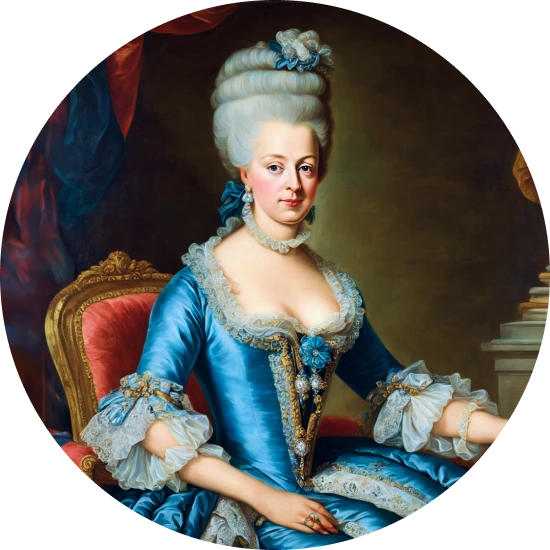
Your maternal lineage may be linked to Marie Antoinette
Because it is so dominant in the general European population, haplogroup H also appears quite frequently in the continent's royal houses. Marie Antoinette, an Austrian Hapsburg who married into the French royal family, inherited the haplogroup from her maternal ancestors. So did Prince Philip, Duke of Edinburgh, whose recorded genealogy traces his female line to Bavaria. Scientists also discovered that famed 16th century astronomer Nicolaus Copernicus traced his maternal lineages to haplogroup H.
The meaning and origin of the last name Guillot
The surname Guillot is of French origin and has an interesting meaning and history. The name is derived from the medieval given name Guillemot, which itself comes from the Germanic name Willahelm. The Germanic elements "will" meaning "desire" and "helm" meaning "helmet" combine to create the meaning "resolute protector" or "determined guardian." Over time, the name evolved in various forms, including Guillot, Guillet, and Guilhot.
The origin of the surname Guillot can be traced back to the Middle Ages in France when surnames were adopted to help differentiate individuals. It is likely that the name was initially bestowed upon or adopted by someone who demonstrated characteristics of being a protector or guardian. Over generations, individuals bearing the surname Guillot spread across different regions, and their descendants passed the name down through subsequent generations. Today, the name Guillot can still be found among French descendants around the world, maintaining its lineage and history.
Geographical distribution of the last name Guillot
The surname Guillot has a predominantly French origin, with its geographical distribution primarily concentrated in France and its former territories. Within France itself, the name is found throughout the country, but it is particularly prevalent in the regions of Normandy, Brittany, and Alsace. These areas have historically strong Celtic, Germanic, and Gallic influences, which may have contributed to the prevalence of the name Guillot. Outside of France, the surname can also be found in smaller numbers in other European countries, including Belgium and Switzerland. Additionally, due to migration and diaspora, there are individuals with the last name Guillot in various parts of North America, particularly in Canada and the United States. It is worth noting that variations of the name Guillot, such as Guillet and Guilhot, may be found in different regions, which further adds to the dispersion of this surname.
Variants and spellings of the last name Guillot
The last name Guillot has several variations and spellings that have evolved over time. One common variation is Guillaume, which is the French equivalent of William. This variation may have originated from individuals who wanted to anglicize the name or adopt a more common English version. Another variation is Guillotte, which may have been derived from the original surname but with a different spelling to reflect a regional dialect or personal preference. It is also possible to come across variations like Gillet, Gillette, Guilhot, and Guilhotte, which have slightly different sounds but retain the core elements of the name. These variations could have emerged from the migration of individuals or families to different regions or countries, where local accents or linguistic influences played a role in modifying the spelling. Overall, the variations of the last name Guillot showcase the flexibility and adaptability of surnames throughout history.
Famous people with the last name Guillot
One of the most notable figures with the last name Guillot is Joseph-Ignace Guillotin (1738-1814), a French physician and politician. Although he did not invent the guillotine, his name became forever associated with this infamous execution apparatus during the French Revolution. Another prominent individual is Edmond Guilloux (1924-2002), a well-known French writer and philosopher. Guilloux is renowned for his resistance activities during World War II and his literary contributions, particularly the novel "Le Sang Noir" (The Dark Blood). In the world of sports, we find Tony Guillory, an American football player who gained recognition for his achievements as a defensive back for the Chicago Bears in the 1980s and early 1990s. His dynamic playing style and strong defensive skills earned him considerable praise and made him a respected name in the NFL.
Genealogical research on the last name Guillot
The Guillot surname has roots in France, with records dating back to the 12th century. The name is of occupational origin, derived from the Old French word "guille" meaning "tongs," indicating that the original bearers of this name were likely blacksmiths or metalworkers. Over time, the spelling of the surname has undergone variations, including Guilot, Gilot, Guilloteau, and others. The Guillot family is predominantly found in the regions of Normandy, Brittany, and Burgundy in France. In the 17th and 18th centuries, some Guillot families migrated to other parts of Europe, including Switzerland and Belgium. In the 19th and 20th centuries, members of the Guillot family emigrated further, particularly to the United States, Canada, and Australia, in search of better opportunities. Today, the Guillot surname is still prevalent in these countries, along with significant numbers in France, reflecting the diaspora of this ancient family name.
Passionate about genealogy, name history, and linguistics, we have been analyzing the origins of names for over 3 years. Our content is based on verified historical, etymological, and statistical data.
Last updated :
Share the origin of your last name with your friends
The surname "Guiad" is of French origin. It is derived from the Old French word "guie," meaning "leader" or "guide," and was likely used as a nickname for someone who acted in a le...
The surname "Guialdo" is of Italian origin. It comes from various places in Italy, primarily from regions such as Umbria, Lazio, and Marche. The name is derived from a place or a p...
The surname "Guiamad" is believed to have originated from the Catalan region of Spain. It is likely derived from a place name or a personal name that was then adopted as a surname ...
The last name "Guiamadil" is of Arabic origin, derived from the Arabic word "wadi", meaning "valley". It is a common surname in Arabic-speaking regions.
The last name Guíamal originated in South America, specifically in Colombia. It is derived from indigenous languages of the region and may have originated from a specific ethnic g...
The surname Guiao Gonzales is of Spanish origin. Guiao is likely to be a Spanish surname, possibly derived from a place name, while Gonzales is a common Spanish surname meaning "so...
The surname Guibes has roots traced back to France. It is derived from a place name, which was originally "Guibe" or "Guibé," found in various regions of France, such as Brittany ...
The last name "Guibo" is of French origin. It is believed to be a variant of the surname "Gibault", which is derived from the Latin personal name "Gibbo" or "Gib.
The last name "Guibson" is of English origin. It is derived from the medieval personal name "Gib" or "Gibbe," which is a pet form of the name "Gilbert." The suffix "-son" indicates...
The surname Guichandut is of Basque origin. It is derived from the Basque words "gui" meaning fog or mist, and "chandut" meaning diligent or hardworking.
The surname Guichard is of French origin and is derived from a given name, Guihard, which was a medieval diminutive of the Old High German name Godehard, composed of the elements g...
The surname Guichaux is believed to be of French origin. It is likely derived from the Old French word "guichet," meaning small window or little opening. This surname may have been...
The surname Guicheteau is of French origin. It is derived from the Old French word "guichet," which means "window" or "small opening," and the suffix "-eau," which is typical of Fr...